Engineered to Solve a Real Problem

Every design decision in the Bull Barrier system was driven by the same question: what does a barrier actually need to do on a real site, under real conditions, deployed by real crews? The answer is the patented hinge-and-slot interlocking mechanism — the innovation that makes Bull Barrier commercially and operationally distinctive.

Traditional barrier connections are designed for the factory or the drawing board — they assume perfect alignment, clean surfaces, and controlled conditions.

On a live site, conditions are different. Ground is uneven. Units are handled hundreds of times across their working life. Minor impacts from vehicles, plant, and machinery are routine. Connections that rely on tight tolerances, bolts, pins, or keyed slots become difficult to use after a few deployment cycles and unreliable after many.

The Bull Barrier hinge-and-slot mechanism was designed specifically to address this reality. It connects units quickly and reliably in the conditions that exist on actual sites, and it maintains that connection integrity across thousands of deployment cycles — including after the minor impacts and deformation that are an inevitable part of a barrier’s working life.

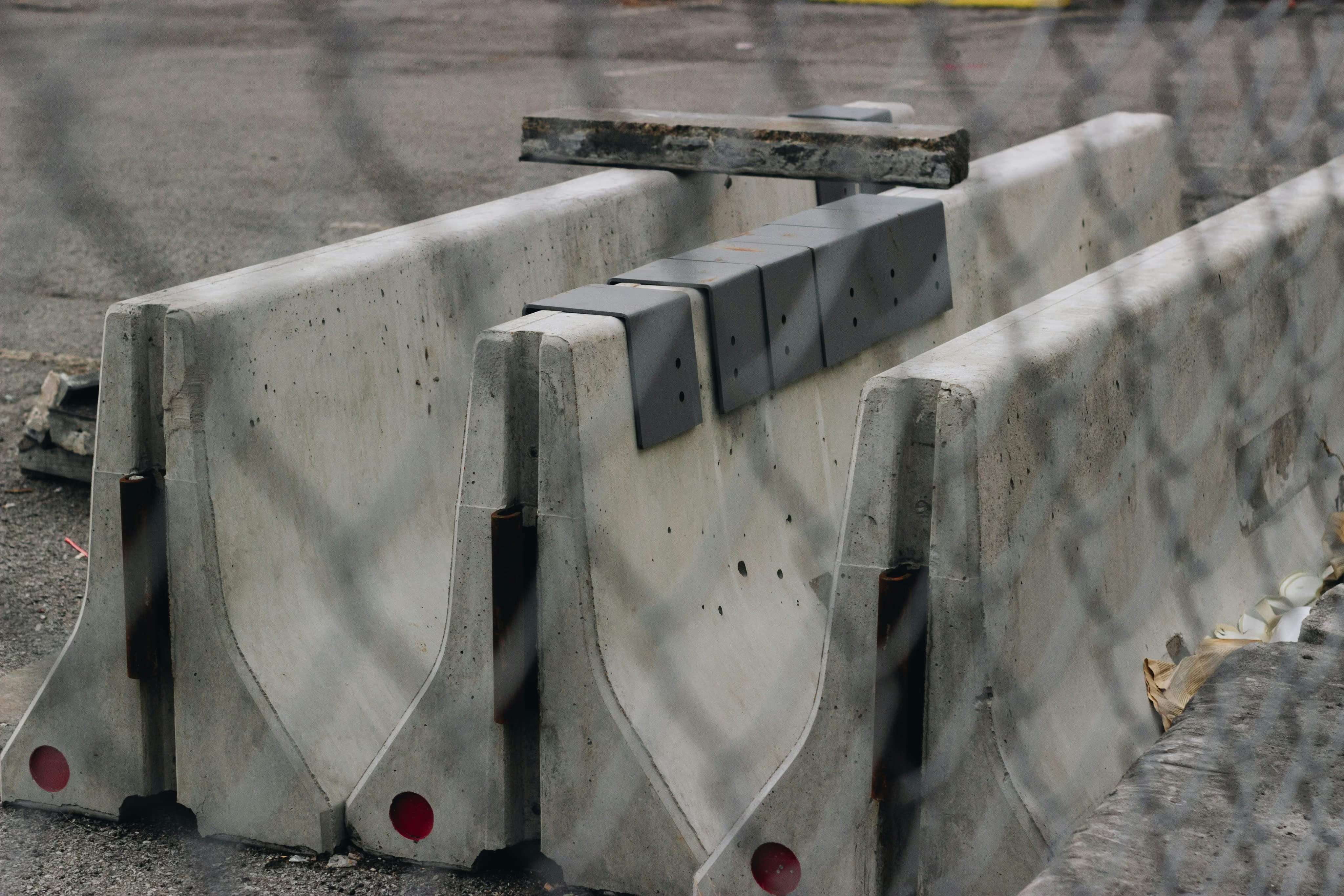
Concrete road barriers stacked at a construction site

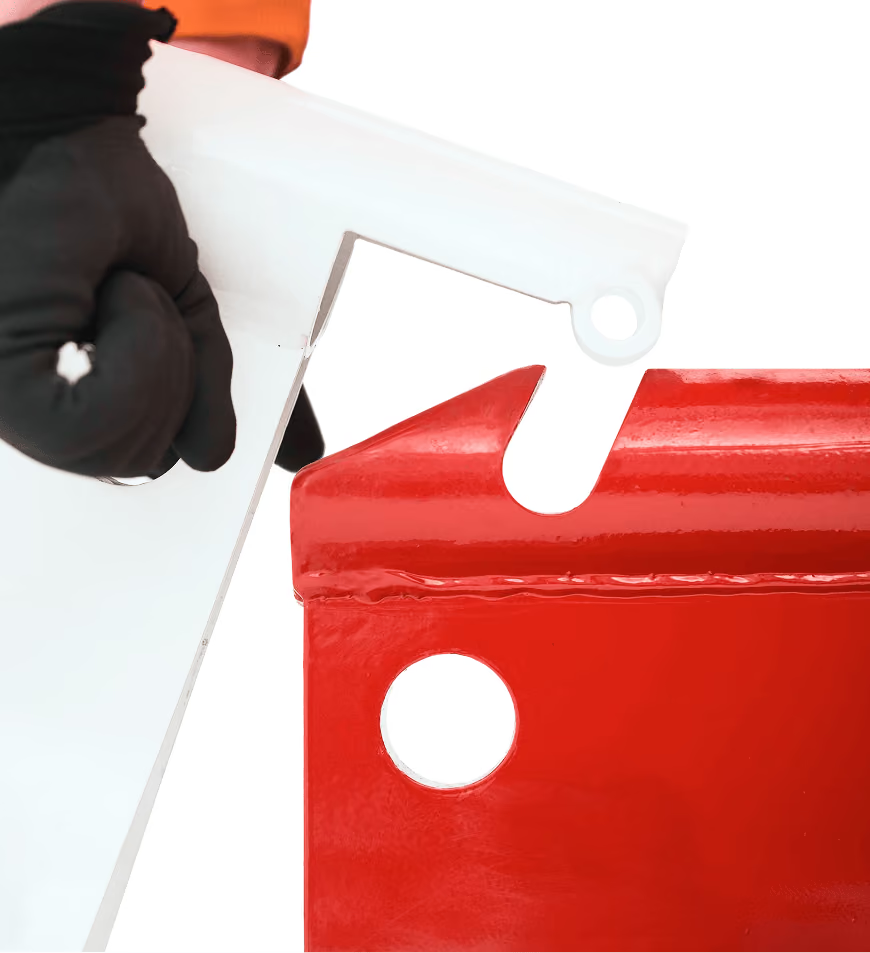
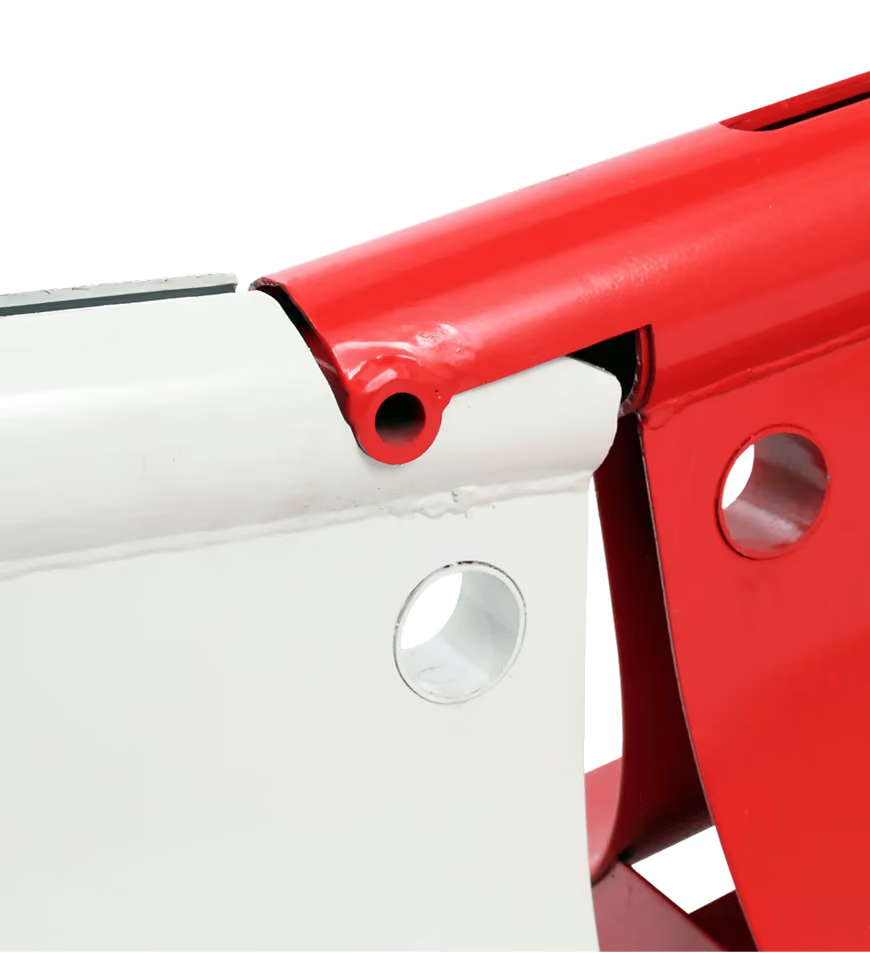
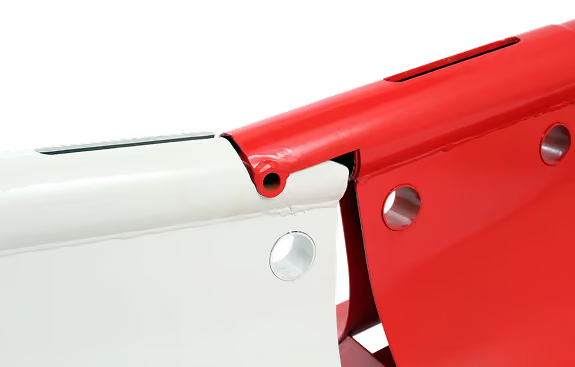
The patented hinge-and-slot connection allows two Bull Barrier Base Sections to be linked and unlinked by hand in seconds. The mechanism is mechanically simple: a hinge point on one unit engages with a slot on the adjacent unit, creating a pivot connection that locks the units together along the barrier line. This connection achieves three critical engineering outcomes simultaneously:

Worker positioning the white Bull Barrier hinge above a red sectionClose-up of connected red and white Bull Barrier sections

Tool-free connection and disconnection

No bolts, pins, clips, or specialized tools. The hinge-and-slot engages by positioning the units and lowering the connection into place. Disconnection is the reverse. This means faster installation, faster reconfiguration, and lower training requirements for site crews.
Structural continuity for vehicle restraint

When the Reinforcement Bar is inserted through the top tubes of connected Base Sections, the hinge connection works in concert with the continuous bar to distribute impact forces along the barrier line. The hinge allows controlled articulation while the Reinforcement Bar provides the structural line needed for vehicle containment and redirection. This combination is what achieves the EN 1317-2 (T2, W6) classification.

Post-impact deformation tolerance

The hinge geometry is designed to accommodate the minor deformation that occurs when barriers are struck by vehicles, plant, or machinery during normal service. Unlike rigid connections that bind or fail after impact, the hinge-and-slot maintains reliable engagement even when individual units have been deformed by previous contacts. This eliminates the need to replace units after every minor impact — a significant cost and operational advantage across thousands of deployment cycles.

The hinge-and-slot mechanism is protected by a patent because it represents a genuine engineering advance in temporary barrier connection technology.

The combination of tool-free operation, post-impact tolerance, and vehicle restraint structural performance in a single connection mechanism has no equivalent in any competing temporary steel barrier product.

This patent gives Bull Barrier’s partners a product that is defensible in the market: it cannot be copied, cloned, or undercut by generic alternatives. The design differentiation is permanent and structural, not cosmetic.

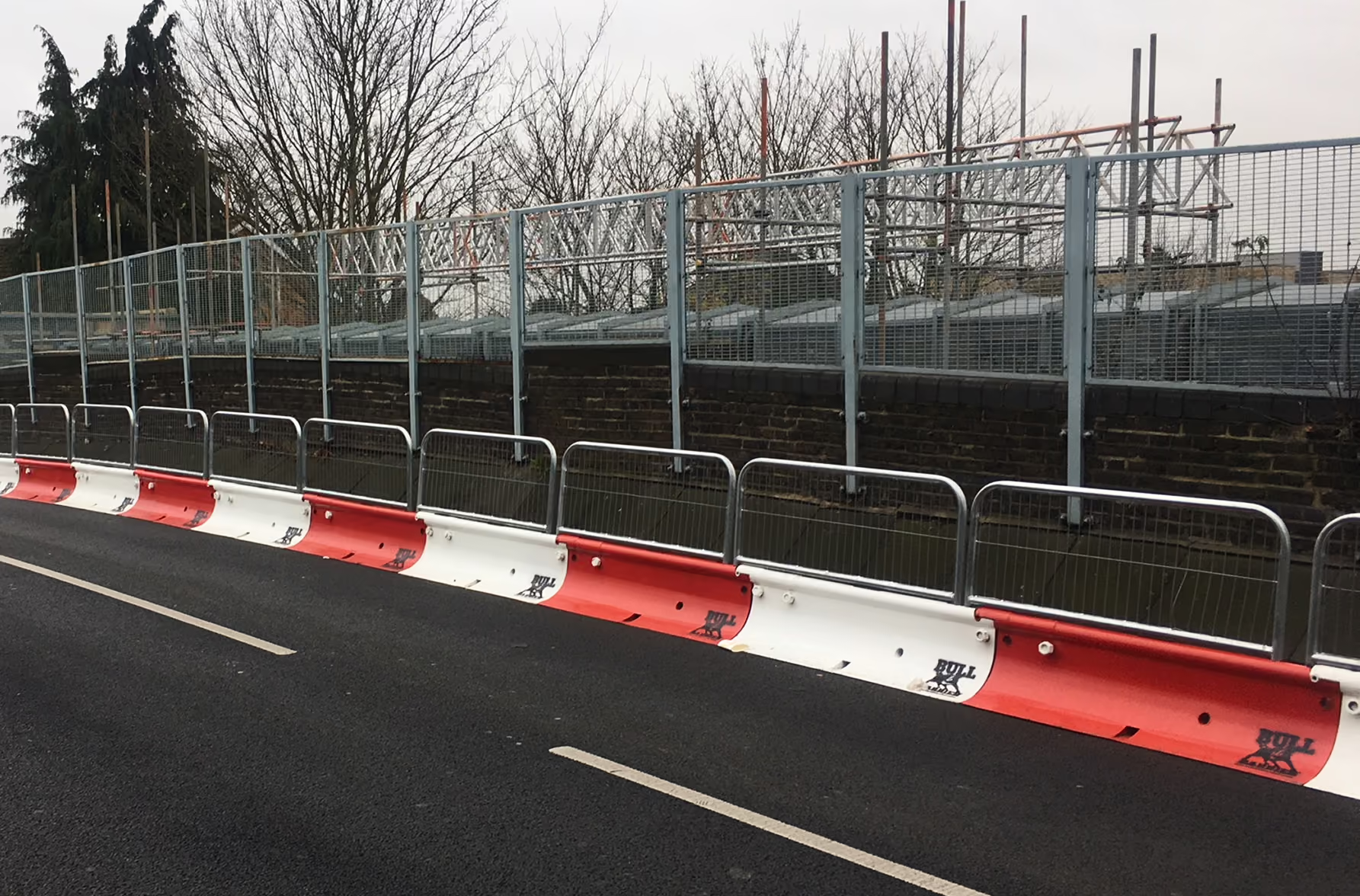
Bull Barrier sections with mesh panels along a roadside

Beyond the hinge-and-slot mechanism, every element of the Bull Barrier design has been optimized for the practical realities of temporary works:

Weight

At 46 kg (101 lbs) per Base Section, Bull Barrier is among the lightest steel barriers of its type. This weight is the result of deliberate engineering trade-offs: heavy enough to provide genuine physical protection and stability (rated to 54 mph wind resistance without additional ballast), light enough for two-person manual handling without crane or forklift assistance.

Stackability

Units are designed to stack efficiently for storage and transport, reducing depot footprint and maximizing units per truck load.

Curved profile

The barrier’s profile follows straight runs, gentle curves, and corner configurations without requiring different product variants. The same Base Section handles linear and curved deployments.

Accessory compatibility

The Base Section is designed as a platform for the full accessory range — Pedestrian Mesh Extension, Full Height Mesh Extension, Corner Mesh Panel, and Corner Barrel / End Section — without adapters or modification.

Frequently Asked Questions

Close-up of the Bull Barrier interlocking connection

Got more questions?

What makes the Bull Barrier connection different from other barrier systems?

Bull Barrier uses a patented hinge-and-slot interlocking mechanism that allows tool-free connection and disconnection, tolerates post-impact deformation, and provides structural continuity for vehicle restraint when combined with the Reinforcement Bar. Competing systems typically use bolted, pinned, or keyed connections that require tools, bind after impact, or cannot support vehicle containment.

Why is the design patented?

The hinge-and-slot mechanism is patented because it is a genuine engineering advance: no competing temporary steel barrier offers the same combination of tool-free operation, post-impact deformation tolerance, and vehicle restraint structural performance in a single connection design. The patent gives distribution partners a defensible product that cannot be replicated.

How does the barrier handle impacts without the Reinforcement Bar?

Without the Reinforcement Bar, the hinge-and-slot mechanism accommodates minor impacts from vehicles, plant, and machinery by allowing controlled deformation at the connection point without losing engagement. The barrier remains connected and functional after routine site contacts. In this configuration, Bull Barrier provides pedestrian protection and separation — not vehicle restraint.

How does the Reinforcement Bar work with the hinge mechanism?

The Reinforcement Bar inserts through the top tubes of connected Base Sections, creating a continuous structural line along the barrier. During a vehicle impact, the hinge allows controlled articulation at the connection points while the Reinforcement Bar distributes the impact force along the barrier line. This combination is what achieves the crash-tested vehicle restraint performance classified to EN 1317-2 (T2, W6).

Has the design been independently tested?

Yes. Bull Barrier with the Reinforcement Bar has been independently crash-tested and classified to EN 1317-2, achieving containment level T2 and working width class W6. In North America, simulation crash testing against relevant standards has been completed successfully, with full-scale live testing planned for 2027.

Ready to Specify
Bull Barrier?

Download technical datasheets, EN 1317-2 crash test summaries, and installation guides — or contact our team to discuss your project requirements.

UK & Europe

Bull Barrier Limited (Head Office)
Blackwood Barns
118A New Market Road
Bury St Edmunds, Suffolk
IP33 3TF, UK

0843 557 7477

Middle East & Asia

MEDES FZE
Sheikh Rashid Tower
Dubai World Trade Centre
Dubai, UAE

+971 50 476 3771